
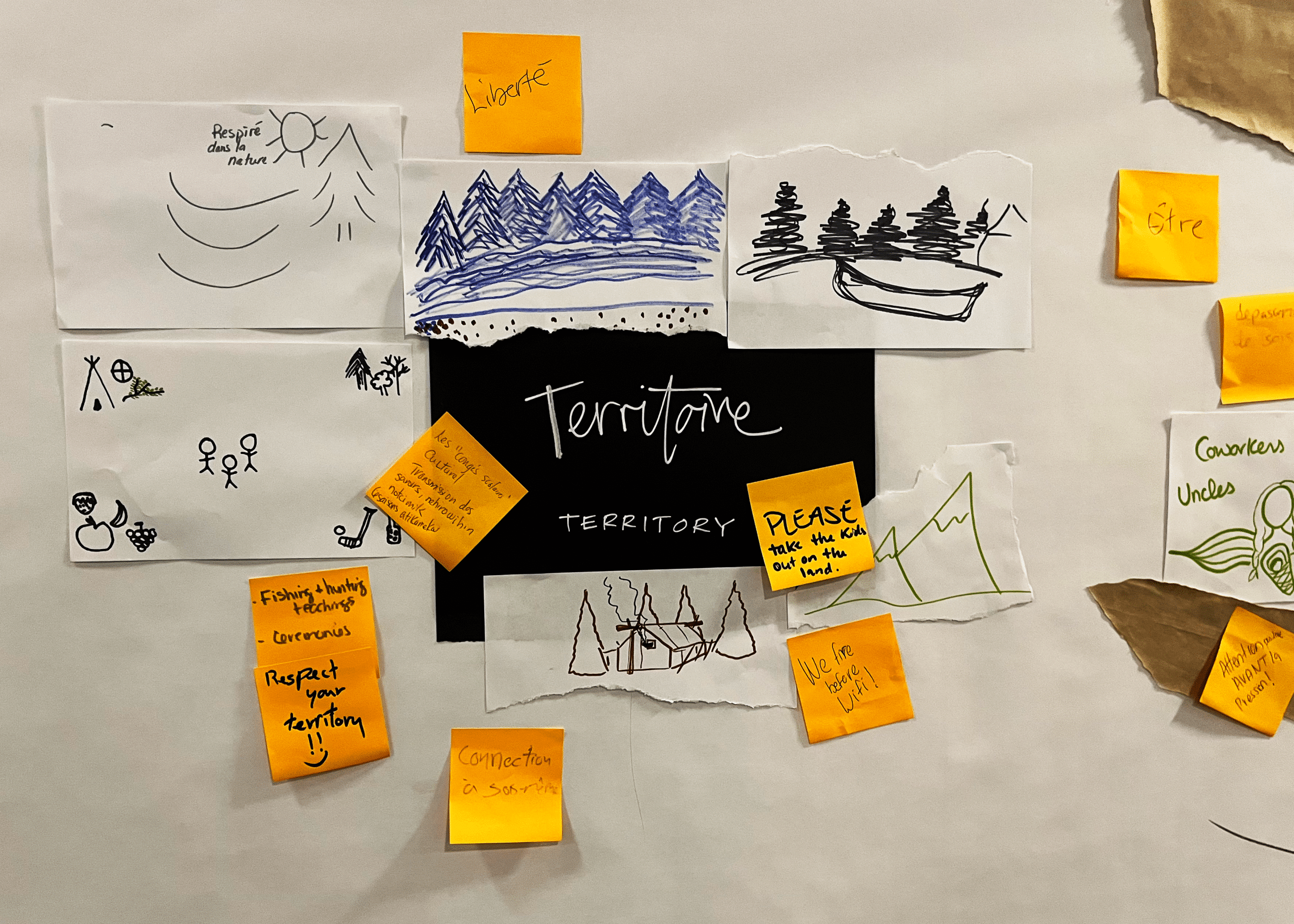
At the Gathering of the Native Friendship Centre Movement of Quebec, Canada, Percolab Coop was invited to lead a consultation with over 200 participants to refresh the Youth Strategy—(during the gathering, we also offered a visual thinking workshop in a breakout session to engage people in creative, meaningful ways).
During the Visual Thinking Workshop, participants identified keywords that come up in their work and a drawing to represent that word. This gave us a rich visual vocabulary we could lean on when creating visuals for the consultation. Using these visuals, we created a mural for the strategy themes that wasn’t just our interpretation of the themes but was a rich mix of interpretations and connections.

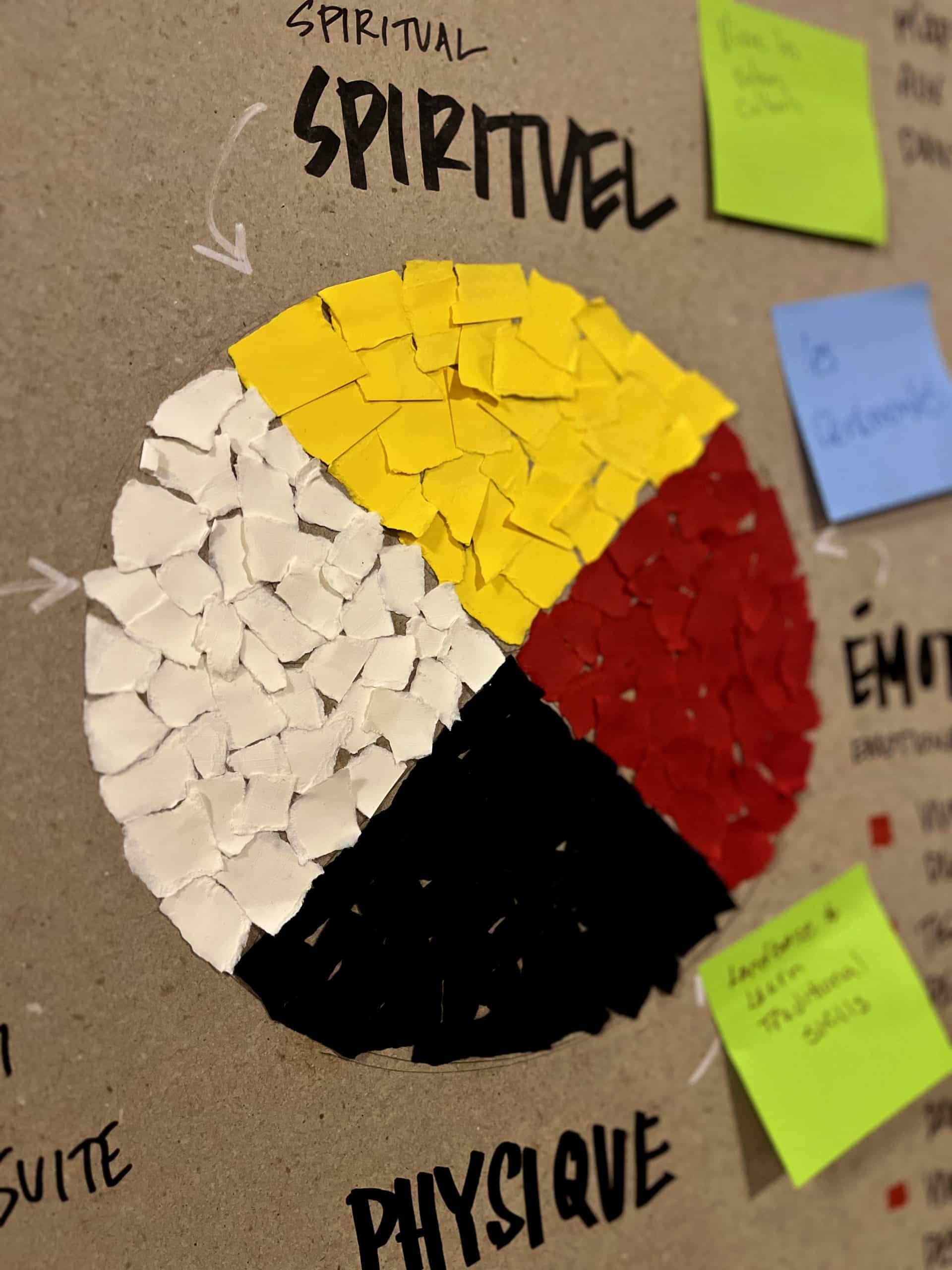
In the plenary, we presented the strategic themes in a collage of visuals from the workshop. These were presented alongside murals of the vision, orientations, which were displayed around the room, inviting movement and reflection when participants were invited to do a gallery walk. Their impermanent, handmade feel signaled that the plan was still evolving and invited people to help shape it.
We then led participants on a collective intelligence process to create the actions that could be taken in line with the strategic themes. Participants were invited to sit at tables organised by each theme and then invited:
- By yourself: Draw your actions related to the theme.
- Share with a partner: notice similarities and differences.
- Co-create: a visual vision of the future and the actions needed.
- Share your mural and reflections with the whole group.
We gathered these visuals and words into a larger collage and mural, organized by strategic themes, and presented this back to the room. This real-time harvest gave shape to an emerging collective vision—one grounded in participants’ expressions. Similarly to the approach of the themes, we cut and pasted their visuals and used their words to create a collage of the emerging vision.
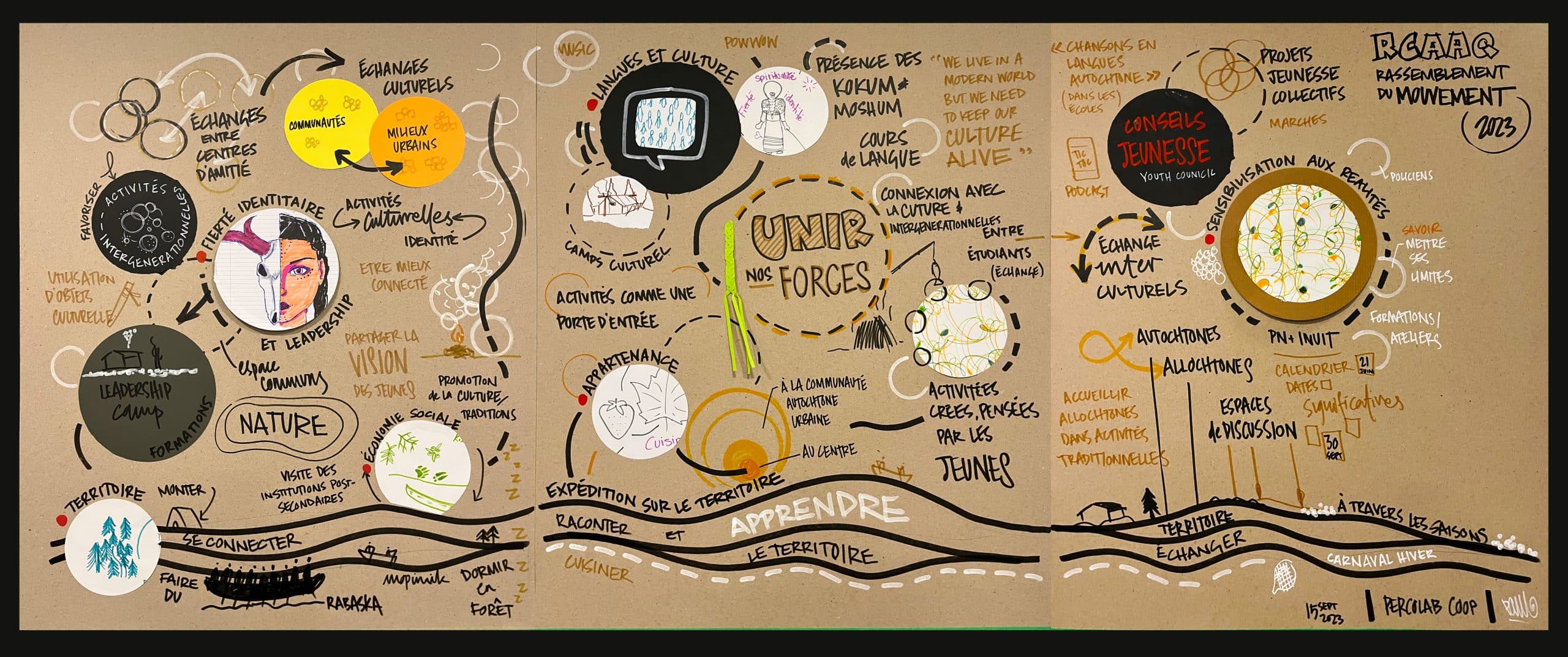
The purpose of the harvest was to:
- Represent collective priorities and actions in a meaningful way
- Create a sense of inclusion, unity, and belonging
- Honour the complexity of the work by tapping into the intelligence in the room
When people see their own contributions in the harvest, they feel seen, valued, and energized. Especially when working with First Nations and Inuit participants, it was essential that visuals came from the community itself, not imposed or interpreted by outsiders. This approach ensured that cultural meaning stayed intact and that the strategy reflected those present, not a generalized idea of many nations. In the end, harvesting wasn’t just documentation, it was a celebration of identity, wisdom, and a shared path forward.