
From my window, I see the blue sky filled with sunlight.
A well-known yet perhaps underutilized tool: the Johari Window. While it can be used in various ways for collaborative work, this article presents two popular applications at Percolab Coop:
- Enhancing collective leadership through a shared understanding of challenges.
- Developing the potential of team members.
Johari?
In the 1950s, psychologists Joseph Luft and Harry Ingham combined their names to create the Johari Window model. Beyond imagining the fun they must have had that evening, the model serves as a tool to open dialogue, foster a better understanding of complex issues, and promote individual and collective development.
Self-awareness, but not only that!
The model primarily provides a structured framework to facilitate dialogue in sensitive relational contexts. Described as a collective relational tool (Halpern, 2009), it fosters a shared understanding and helps build trust among group members.
The Johari Window (see Figure 1) consists of the following quadrants:
- The Open Quadrant (known to oneself and others)
- The Hidden Quadrant (known to oneself but unknown to others)
- The Blind Spot Quadrant (unknown to oneself but known to others)
- The Unknown Quadrant (unknown to both oneself and others)
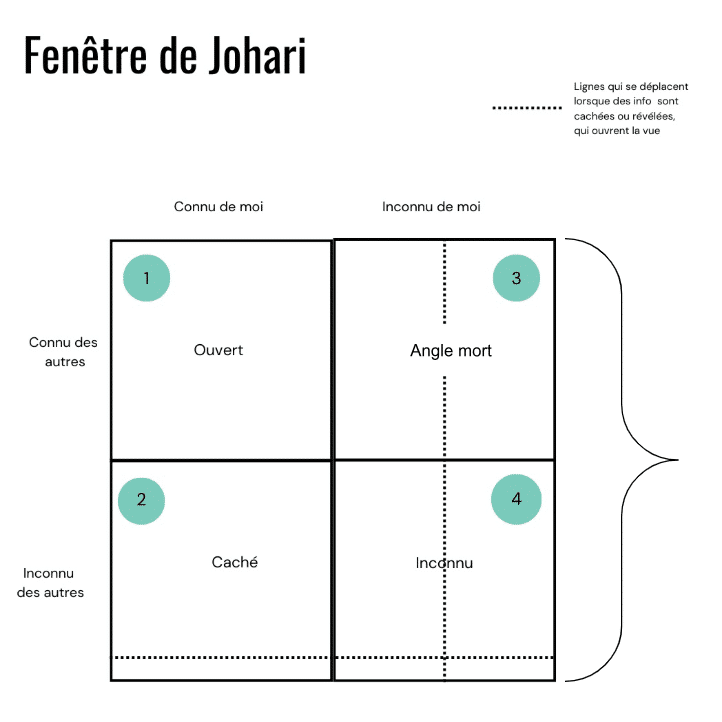

Together, quadrants 3 and 4 form the blind zone—this represents our vulnerability. Just as checking blind spots is crucial when driving, examining our own blind spots helps uncover hidden elements in Quadrant 3. This can be achieved by inviting others to give us feedback, increasing the frequency of courageous conversations, and making more room for diverse voices around us.
Quadrant 4 (unknown to everyone) can only be revealed through shared information and reflective moments that open up new understanding. Through this process, new insights will gradually emerge and become accessible.
We can expand or shrink these windows by practicing transparency and revealing ourselves with vulnerability, in a context of psychological safety.
Psychological Safety
Psychological safety is defined as the extent to which people perceive their environment as conducive to interpersonal risk-taking behaviors, such as speaking up or asking for help. It is a key factor in work environments where learning is essential.
Amy C. Edmonson
Convergence and Divergence: What Do We Learn?
Beyond the common use of the tool, which you can easily find on numerous websites, here are two specific and detailed examples of practices implemented at Percolab, both within the team and in client support contexts.
1. Using the Johari Window to Build a Shared Understanding of Key Issues
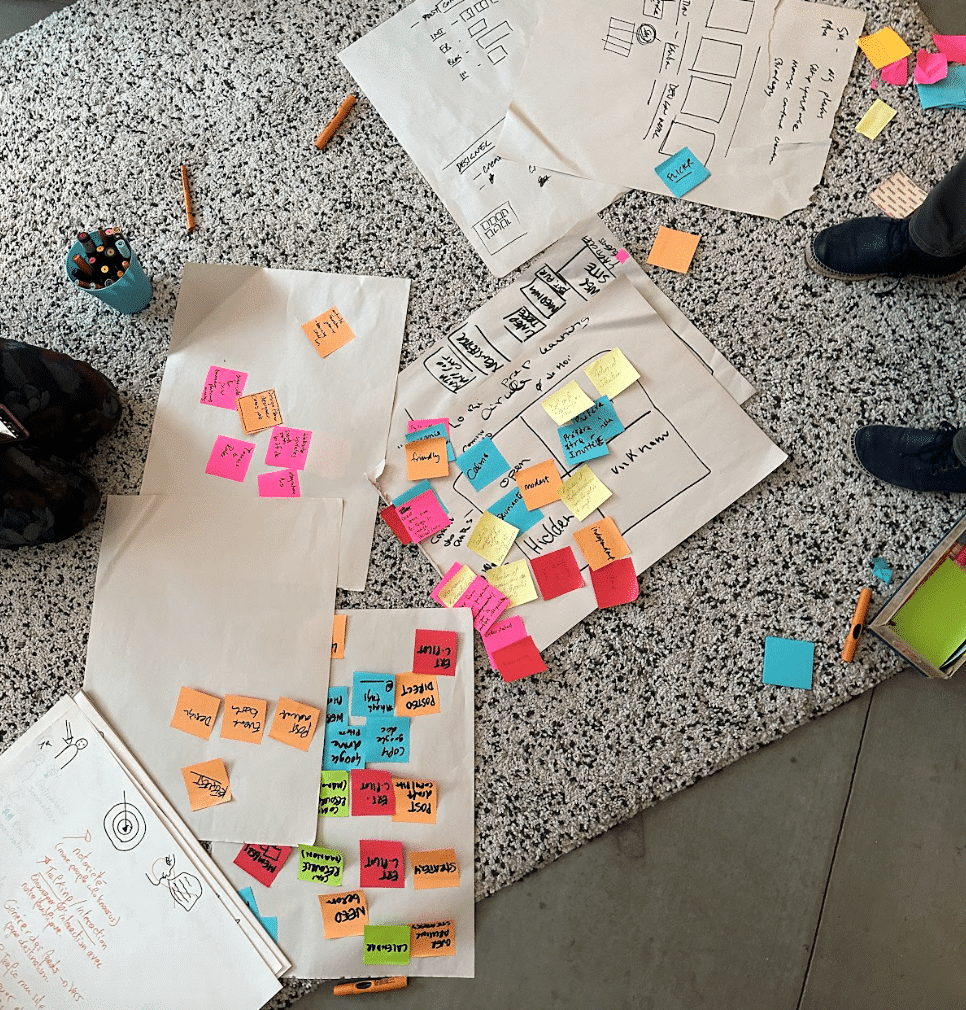
The Johari Window helps facilitate conversations about issues where the team assumes a common understanding exists. However, when diving into specific questions, it often becomes clear that alignment is not as strong as expected. Corridor discussions or underlying anxiety can indicate that using this process could provide valuable support.
Here are some examples of topics we have explored with this method:
- The socio-ecological transition
- The ideal candidate
- Creating a product and service page for the website
Process
- Start with the model – Place a diagram of the Johari Window at the center.
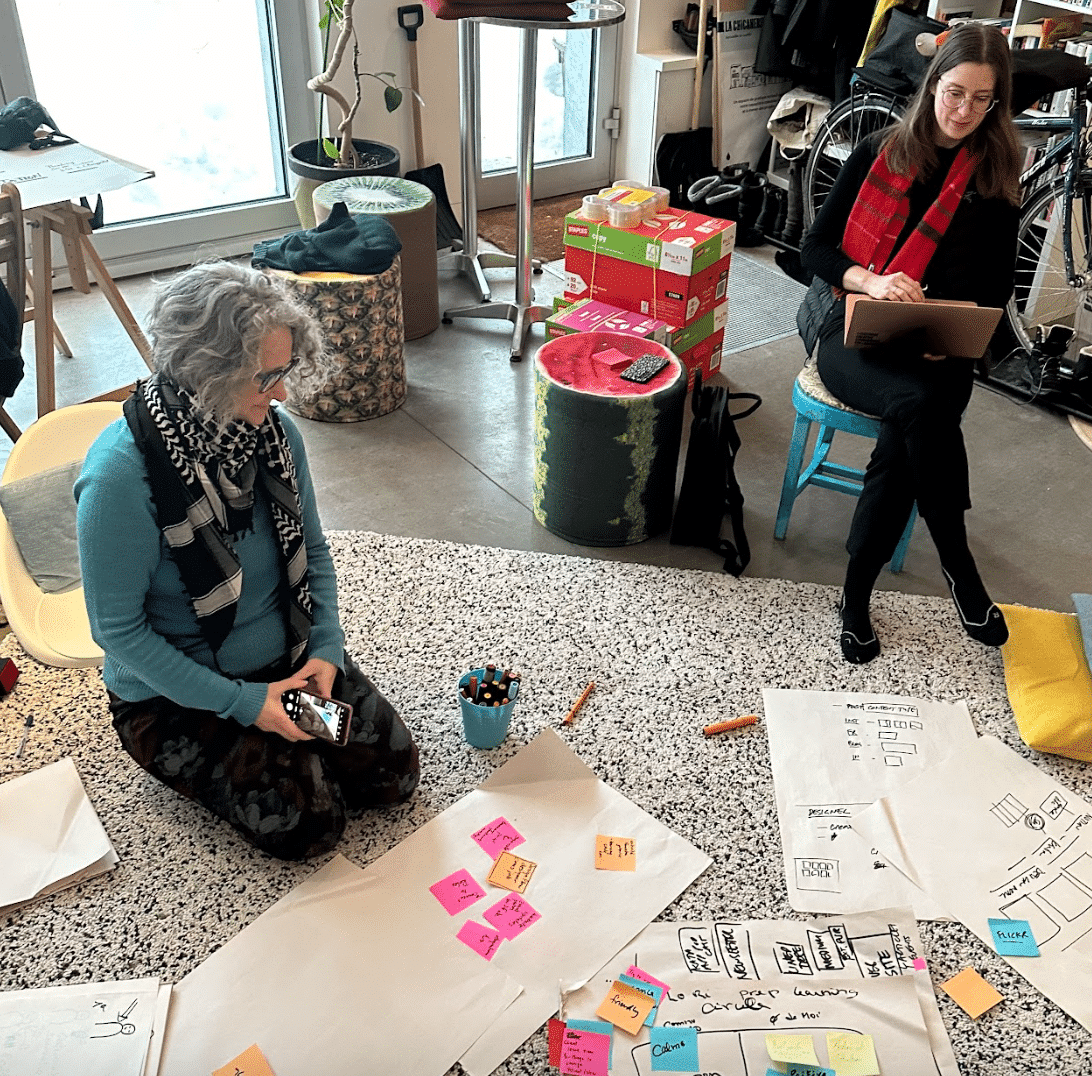
- Individual reflections – Each participant documents their insights for each of the four quadrants as precisely as possible. (Tip: Use color-coded sticky notes—one color per quadrant.)
- Broaden the perspective – If, like Percolab, you often invite external stakeholders to your meetings, Quadrant 3 (blind spot) will become much more accurate, based on concrete input rather than just internal perceptions. Additional data, such as satisfaction surveys, exit interviews, and scientific research, can further enrich the insights.
- Group discussions – Working in small groups enhances efficiency and provides a shared perspective. The process highlights areas of convergence (Quadrant 1: open area). It also prompts reflection on hidden information (Quadrant 2: known to oneself but not to others).
- Why do we not communicate certain information?
- What fears emerge when examining Quadrant 2?
- How does the blind spot (Quadrant 3: known to others but not to us) interact with the hidden quadrant?
- Plenary synthesis – Bringing all perspectives together helps construct a new narrative. Thought-provoking questions guide the discussion:
- What stands out from our exchanges?
- What new clarity emerges?
- Where should we focus our energy?
- Who should we consult?
- What’s missing?
- What’s the next step?
By using the Johari Window collectively, teams strengthen trust and better understand each other’s perspectives. This practice fosters transparency: as more information is shared, the blind zone (Quadrants 3 & 4) gradually shrinks. Over time, this contributes to psychological safety (Edmondson, 2016).
2. Using the Johari Window for personal growth: “What don’t I know that I Should?” 🤔
In the context of learning and development—one of the seven domains of the Horizontal Leadership Model (Slade, 2018)—Percolab employs various practices to support growth, such as learning circles, learning contracts, appreciative feedback, and post-mortems. These approaches cultivate an environment of continuous learning and collaboration.
A Real Example
Recently, a colleague made a bold request on the team’s communication platform (Slack):
“I’m working on my learning contract—what are my blind spots?”
While this was a well-intentioned and courageous move, it’s important to note that an open discussion space, no matter how supportive, is not necessarily a psychologically safe environment for addressing such sensitive topics. A structured and intentional approach—like using the Johari Window—can transform this exploration into a safe and enriching experience.
A Simple and Effective Process for Personal and Collective Growth
Setting the Stage
- Prepare the framework – Draw the four quadrants of the Johari Window on a large sheet of paper.
- Provide materials – Have sticky notes available.
- Small groups – Work in teams of 4-6 people (or subgroups for larger teams).
Objective
Reveal the blind zone (Quadrants 3 & 4) and encourage learning by shifting elements between quadrants through collective input.
Steps
- Individual reflection – The person seeking insights fills in:
- Quadrant 1 (open area): What they already know about themselves.
- Quadrant 2 (hidden area): What they know about themselves but haven’t shared with others.
- Colleague contributions – Team members add insights:
- Quadrant 3 (blind spot): How others perceive the person.
- Group discussion –
- Members share their perceptions, enriching Quadrants 1 and 3.
- A first round allows clarifying questions and discussions on the gathered information.
- Reflection circle –
- In a second phase, participants share surprises and new revelations.
Illustration
A colleague initially wrote in Quadrant 1 that she enjoyed being in a support role. However, in Quadrant 2, she admitted to a hidden desire to take on leadership roles and lead projects. Through discussion, it became clear that she was holding herself back—uncovering an element from Quadrant 4 (unknown area).
Concrete Actions for Learning
Following this process, Percolab team members can:
- Develop a personalized learning contract
- Identify a buddy or mentor for support
- Request team assistance in achieving their growth objectives
At the same time, the team commits to creating a supportive environment to help individuals reach their potential, reinforcing a culture of shared learning and collaboration.
Why Adopt This Method?
By structuring the feedback process, this approach increases transparency and trust within the team. It values the courage to seek feedback while minimizing the risks of an unstructured group setting. This enables individuals to explore their blind spots and unlock their potential in a respectful and supportive framework.
This process aligns with the principles of horizontal leadership, where individual and collective learning feed into each other, fostering skill development and strengthening team cohesion.
Key Considerations
Psychological safety is fragile in work environments. Start by practicing with collective issues before applying the model at an individual level. Each participant should feel comfortable sharing information at their own pace.
One of our colleagues demonstrated great courage by seeking feedback from the team. Preliminary discussions took place beforehand, ensuring a structured and supportive approach.
Usage
The most common use of the Johari Window is as a tool for personal and professional development. Here are some additional examples:
Improving communication: By identifying and sharing aspects of oneself that were previously unknown or hidden, individuals can enhance their communication with others by establishing a foundation of trust and transparency.
Strengthening interpersonal relationships: Using the Johari Window, individuals can better understand how they are perceived by others and how they perceive others. This can foster the development of stronger and more authentic relationships.
Leadership development: Leaders can use the Johari Window to better understand their own strengths and weaknesses, as well as how they are perceived by their team. This can help them develop their leadership style and build more effective teams.
Conflict management: By identifying the unknown and unrecognized areas within the Johari Window, individuals can uncover aspects of their behavior that may cause conflicts or misunderstandings with others. By recognizing these aspects, they can work on improving them and reducing interpersonal conflicts.
Personal growth: By exploring the blind and hidden areas of the Johari Window, individuals can discover aspects of their personality or behavior that they were previously unaware of. This can help them gain deeper self-awareness and work on their personal development.
In summary, the Johari Window is a powerful tool for personal growth, relationship development, and improved communication in both professional and personal contexts.
References
Edmondson, Amy C., Monica Higgins, Sara J. Singer, and Jennie Weiner. “Understanding Psychological Safety in Healthcare and Education Organizations: A Comparative Perspective.” Special Issue on the Role of Psychological Safety in Human Development. Research in Human Development 13, no. 1 (2016): 65–83.
Edmondson, A. C., & Lei, Z. (2014). Psychological safety: The history, renaissance, and future of an interpersonal construct. Annual Review of Organizational Psychology and Organizational Behavior, 1, 23–43. https://doi.org/10.1146/annurev-orgpsych-031413-091305
Halpern, H (2009)Supervision and the Johari Window: A Framework for Asking Questions, Education for Primary Care,20:1, 10-14, DOI: 10.1080/14739879.2009.11493757